
Find Cumberland County Genealogy
Cumberland County is in southern New Jersey. The county seat is Bridgeton, where the courthouse holds most public records. Families have lived here for centuries, and the county maintains documents that trace that history. Searching Cumberland County genealogy records can connect you to ancestors through deeds, wills, vital records, and court files. Vineland, the county's largest city, also has deep historical roots. Whether your family ties are in Bridgeton, Vineland, or Millville, Cumberland County records are a strong starting point for tracing your family line.
Cumberland County Quick Facts
Cumberland County Clerk Records
The Cumberland County Clerk's Office is the main source for genealogy records at the county level. Celeste M. Riley serves as County Clerk, with Deputy Clerks Lori Vissell and Sandra Olbrich. The main office is at the Cumberland County Court House, 60 West Broad Street, Bridgeton, NJ 08302. Phone is 856-453-4860. Email is ccclerknj@cumberlandcountynj.gov. Hours are Monday, Wednesday, Thursday, and Friday from 8:30 a.m. to 4:30 p.m. On Tuesdays, the office stays open until 7:00 p.m.
Cumberland County also has a satellite office called the County Store. It is at The Cumberland Mall, 3849 South Delsea Drive, Unit B18, Vineland, NJ 08360. Phone is 856-453-4870. The store is open Monday through Friday from 11 a.m. to 7 p.m. and Saturday from 10 a.m. to 4 p.m. A $3.00 convenience fee applies when paying with a credit or debit card at either location.
The Cumberland County Clerk's website offers more details about available services and how to request records.
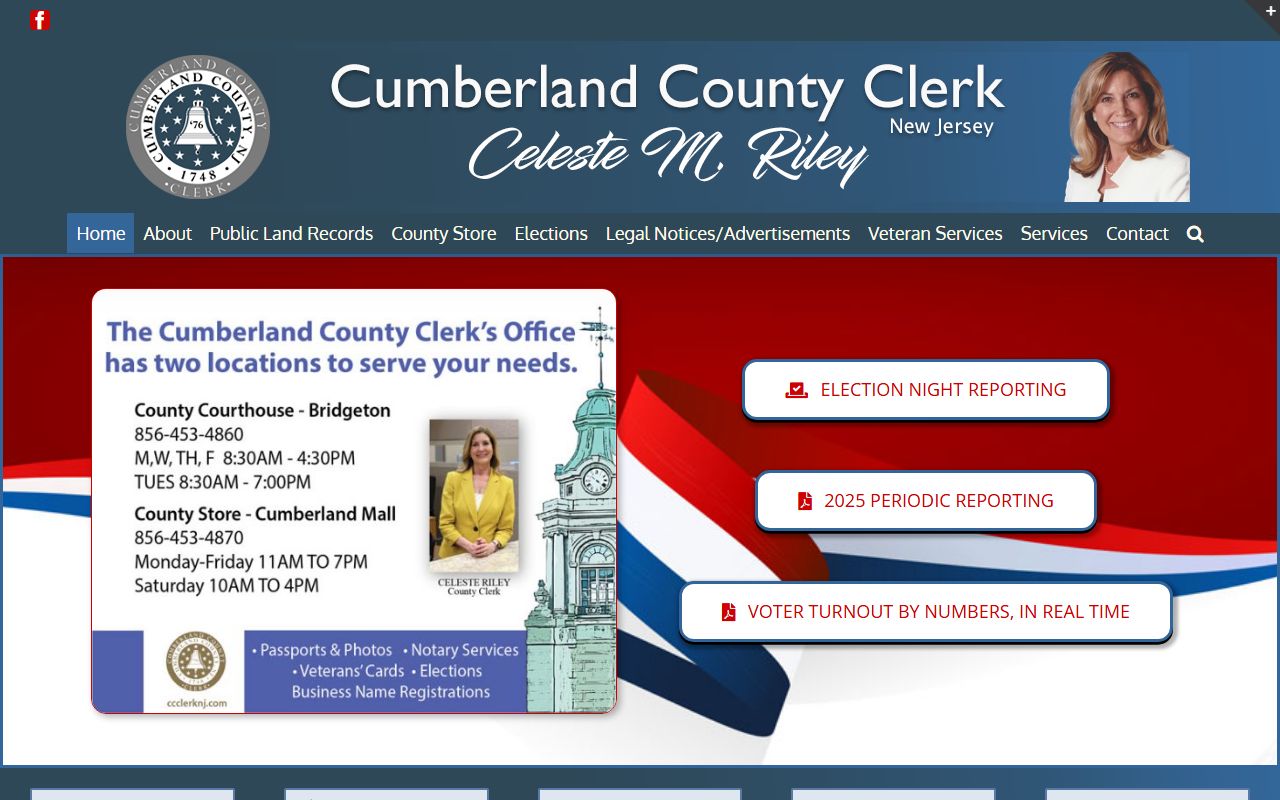
The Clerk's Office handles land records, marriage licenses, and other documents that are useful for Cumberland County genealogy research.
Cumberland County Probate Records
The Cumberland County Surrogate's Office handles probate. Rudolph A. (Skip) Luisi serves as Surrogate. The office phone is 856-453-4800. Hours are Monday through Friday, 8:30 a.m. to 4:30 p.m. Appointments are required. Call before you visit. The office accepts check or cash. Bring a photo ID.
Probate records include wills, estate administration files, and guardianship papers. The Surrogate also oversees adoption records, though those are sealed under New Jersey law. For genealogy research, wills and estate files are among the most valuable documents available in Cumberland County. They name family members, list assets, and show relationships that other records miss. If your ancestor owned property or left a will in Cumberland County, the Surrogate's Office is the place to look.
The Surrogate's duties also include supervising the appointment of guardians and directing the overall operations of the office, all of which generate records useful for tracing Cumberland County families.
Note: Appointments are required at the Cumberland County Surrogate's Office, so always call 856-453-4800 before you plan a visit.
Vineland Historical Society Resources
The Vineland Historical and Antiquarian Society is the oldest local historical society in New Jersey. It was founded in 1864. The museum opened in 1910 and is the oldest purpose-built museum in the state. The address is 108 South 7th Street, PO Box 35, Vineland, NJ 08362. Phone is 856-691-1111. Email is VinelandHistory@gmail.com.
A research library is available for genealogy work. Non-members pay a $10 charge. Appointments are required, and you should schedule at least one week in advance. The collection covers Vineland and the broader Cumberland County area. For anyone tracing family roots in Vineland or southern Cumberland County, this society holds local documents, photographs, and records that county offices may not have.
Cumberland County Vital Records
Vital records are the backbone of genealogy. In New Jersey, the Office of Vital Statistics maintains birth records from 1925, marriage records from 1951, and death records from 1951. For older records tied to Cumberland County, the New Jersey State Archives is the primary source. The Archives holds birth records from 1848 to 1923, marriage records from 1848 to 1948, and death records from 1848 to 1963 on microfilm. These can be viewed in person at 225 West State Street in Trenton.
Under N.J. Rev. Stat. 26:8-24, the State Registrar oversees all vital records registration across New Jersey. Genealogical search fees are $25 plus $1 for each additional year searched. The walk-in center at 140 East Front Street in Trenton offers same-day service. You can also order by phone through VitalChek at 877-622-7549.
The State Archives also holds colonial marriage bonds from 1666 to 1799, divorce records from 1743 to 1947, and probate files dating to the 1670s. These cover all New Jersey counties, including Cumberland County.
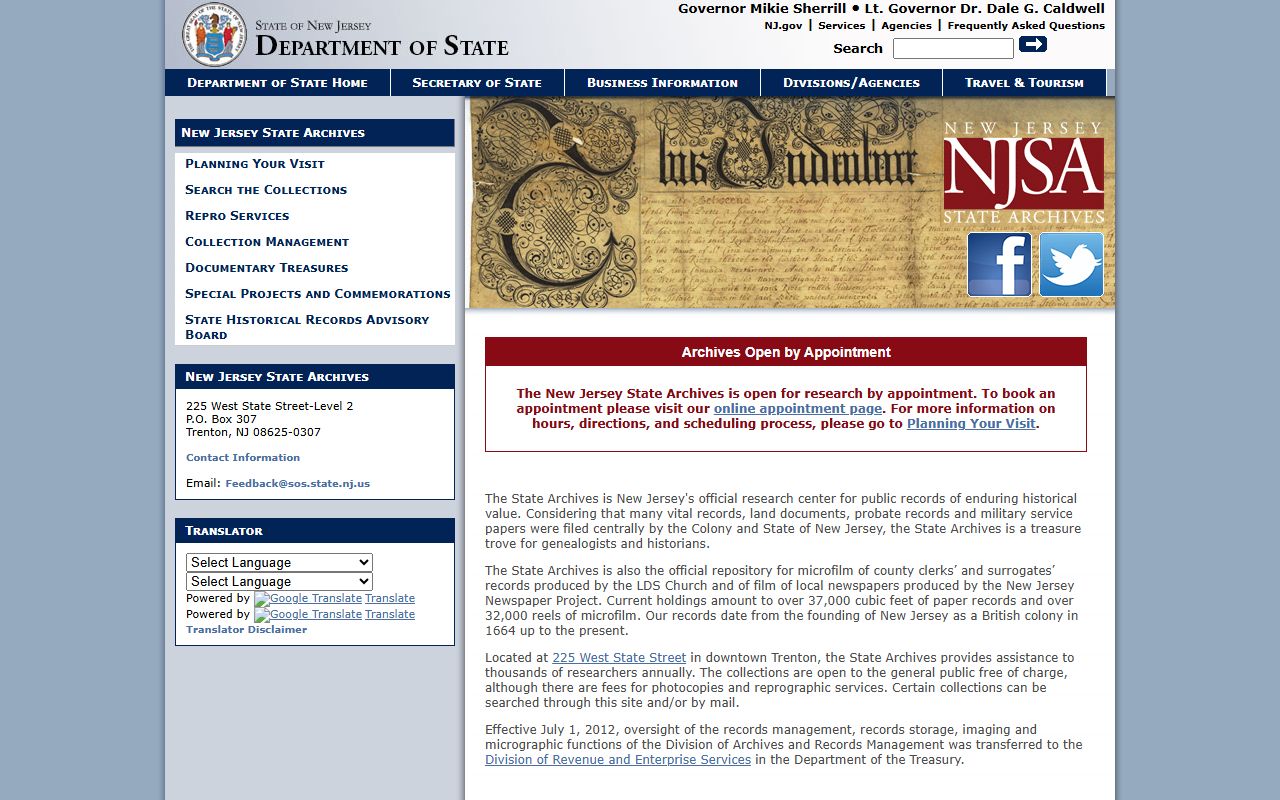
The State Archives website has searchable databases that can help narrow your Cumberland County research before you visit in person.
Note: New Jersey vital records are not public records, so you cannot search them online and must submit a formal written request.
Online Genealogy Tools for Cumberland
Several free online tools help with Cumberland County genealogy. The Reclaim The Records project has digitized vital record indexes from the early 1900s. These include birth, marriage, and death indexes that are free to download from the Internet Archive. They cover all of New Jersey, so Cumberland County entries are included. These indexes help you find the exact record to order from the State Archives or Vital Statistics.
The New Jersey State Library in Trenton has about 18,000 genealogy items. The library offers free access to Ancestry.com (Library Edition) and HeritageQuest at its State Street reading room. It also has 6,000 family histories and 1,000 New Jersey city directories. These directories help track ancestors between census years. The genealogy collection is non-circulating, so you must visit in person.
The Genealogical Society of New Jersey, founded in 1925, publishes a quarterly journal and has cemetery transcriptions online. Their resources cover all counties, and Cumberland County researchers will find them useful for filling gaps in local records.
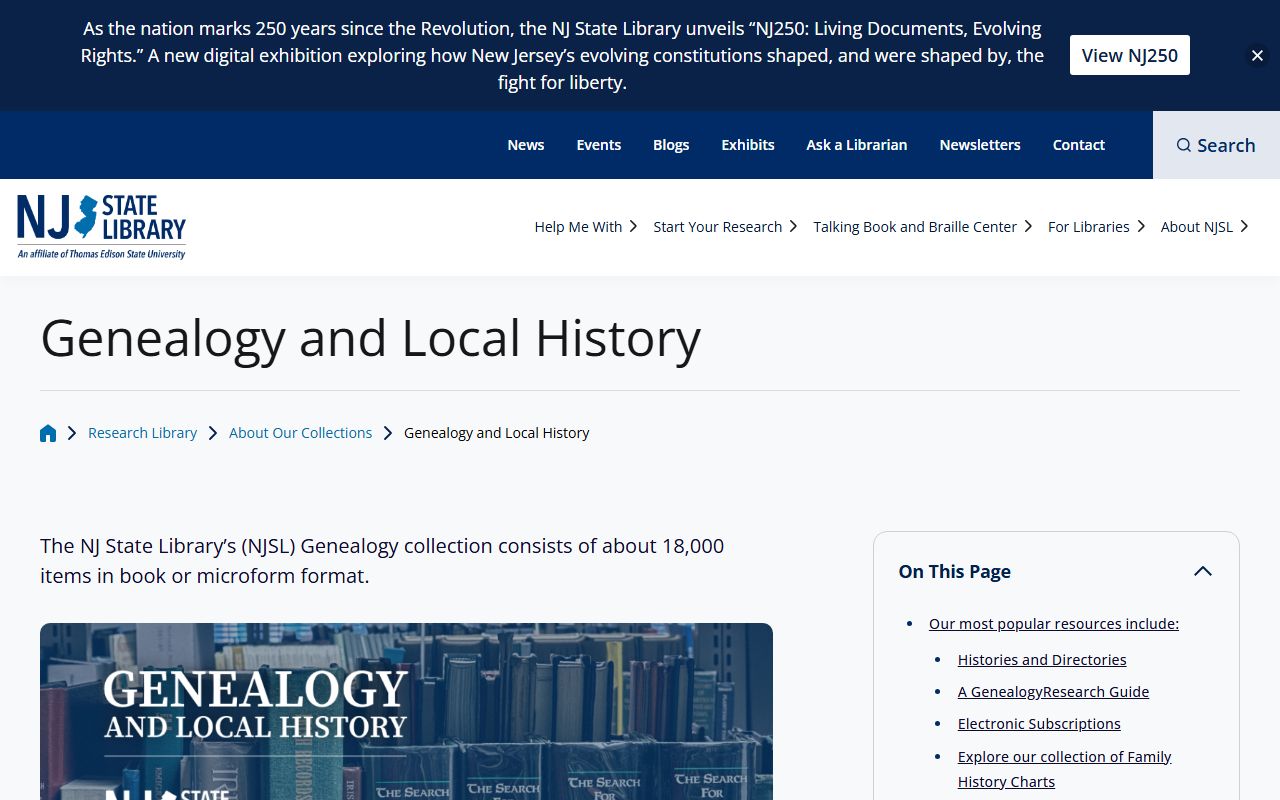
These state-level tools pair well with local Cumberland County sources to build a more complete family picture.
Searching Cumberland County Records
Start with what you know. Names, dates, and places narrow the search quickly. The Cumberland County Clerk's Office in Bridgeton is your first stop for land records, court files, and local documents. The Surrogate's Office handles wills and estates. For vital records, go through the state. For historical context, visit the Vineland Historical Society.
Here are the main record types available for Cumberland County genealogy:
- Land deeds and mortgage records at the Clerk's Office
- Wills and probate files at the Surrogate's Office
- Birth, marriage, and death records through the state
- Census records at the State Archives
- Naturalization records for immigrant ancestors
Cumberland County genealogy research works best when you combine local and state records. The Clerk's Office in Bridgeton and the satellite location in Vineland both offer access to county-level documents. State resources in Trenton fill in vital records and older historical files. Each piece adds to the story of your Cumberland County family.
Cities in Cumberland County
Cumberland County has several municipalities. All county-level genealogy records are maintained at the courthouse in Bridgeton. The Clerk also has a satellite office in Vineland for added access.
Other municipalities in Cumberland County include Bridgeton, Millville, and Commercial Township. All county records for these areas are filed at the Cumberland County Clerk's Office.
Nearby Counties
These counties border Cumberland County. Ancestors often moved between neighboring areas, so checking records in surrounding counties can help fill gaps in your family history research.